 GRASS (GRASS)
- 48社交熱度指數(SSI)-19.38% (24h)
- #57市場預警排名(MPR)-23
- 124小時社交提及量-50.00% (24h)
- 100%24小時KOL看好比例1位活躍KOL
- 概要GRASS reports annualized revenue of about $104 million, price up 1.57%, but social hype fell 19.38%, and oversupply concerns remain.
- 看漲訊號
- Annualized revenue of $104 million
- Real commercial revenue
- Growing demand for AI data
- Slight price increase
- Unique DePIN positioning
- 看跌訊號
- Oversupply pressure
- Declining social hype
- Limited upside
- Reliance on AI labs
- Potential regulatory risk
社交熱度指數(SSI)
- 總體資料48SSI
- 社交熱度趨勢(7D)價格(7D)情緒分佈看漲 (100%)社交熱度洞察GRASS social hype is moderate (48.06/100, -19.38%), activity dropped sharply by 50% mainly due to oversupply concerns, although KOL attention rose 400% and is positively linked to the revenue report.
市場預警排名(MPR)
- 預警解讀GRASS warning rank fell to #57 (down 23), social anomaly dropped 57% to 36.13, KOL attention shift surged 900% indicating a shift in focus, sentiment polarization remains steady at 50.
相關推文
 Chain INK S6.69K @0xchainink
$GRASS : Review 📜 What if the 95% of your home internet connection you never use could be rented out to the AI labs that can no longer crawl the web without getting blocked? Meet Grass, a decentralized data network that turns idle residential bandwidth into an AI data pipeline. Millions of ordinary users run a browser extension, and their connections become the eyes that let AI labs read the open web from real homes rather than blacklisted data centers. It is one of the only DePIN networks that appears to be generating serious revenue. Let's explore where the revenue is real and where the supply overhang bites. 👇 ⚪ Grass at a Glance Marketplace Insight: Grass sits at the crossing point of DePIN and the AI data bottleneck, and it may be the rare DePIN with real commercial pull. A July 2026 holder call reported roughly $52M in second-half revenue, an annualized run rate near $104M, which would put it among the highest-earning DePIN networks in existence. The necessary qualifier travels with that number every time: it is self-reported by the project, not independently audited, and no third party has verified it. The clean contrast is that Grass's structural advantage, residential bandwidth contributed at near-zero marginal cost, is also its structural liability, since the same design puts the network's economics in the hands of users who can uninstall it in an afternoon. ⚪ Mission Grass exists to break the data bottleneck in AI. The argument is that the open web is being closed off, since AI labs crawling from data-center IPs get rate-limited, geoblocked, or fed stale caches, while the companies that can still scrape at scale do it by quietly embedding SDKs in free apps without telling users. Grass's answer is to make the arrangement explicit and paid: users knowingly contribute bandwidth, receive rewards for it, and the data carries a cryptographic proof of where it came from. 🔵 A Brief History Grass began as a reaction to something its founder saw and disliked. Andrej Radonjic had been running a web-scraping infrastructure business when customers began asking for residential IPs, and he learned that large companies were harvesting real people's bandwidth by sneaking SDKs into free applications. He left a PhD in computational and applied mathematics to build the consensual version of that model, founding Wynd Network in Toronto with two co-founders and starting to build in early 2023. The network grew fast on a simple pitch: install an extension, earn points. By the 2024 mainnet period it claimed over two million users, funded through a $3.5M seed and a Series A led by Polychain and Hack VC. The token generated in October 2024 with one of the largest airdrops in Solana's history, reaching roughly 2.2 million wallets, and the token peaked near $3.90 within days before beginning a long decline. Through 2025 and 2026, the project pushed to convert a points economy into a real business. It rebuilt itself as a sovereign data rollup with a ZK processor for data provenance, shipped Live Context Retrieval for real-time AI queries, and raised a $10M bridge round co-led by Polychain and Tribe. A July 2026 holder call reported roughly $52M in H2 revenue. The same period brought a genuine community rupture, with users reacting badly to a team podcast appearance and reports of app uninstalls and token selling, a reminder that in this model the supply side is also the shareholder base. 🔵 Ecosystem Narrative The organizing idea is that if AI needs the open web, someone has to own the pipes that reach it, and that someone can be the users themselves. ➛ Residential node network. 2.5M-plus nodes across 190 countries, run through a browser extension or app, giving AI labs a geographically diverse view of the web that no single data center can replicate. ➛ Sovereign data rollup. Nodes fetch, routers relay, validators verify, and a ZK processor generates proofs that the scraped content was not tampered with, with provenance recorded on Solana. ➛ Live Context Retrieval. Real-time data retrieval for AI models that need current information rather than a stale training set, which the founder has called where most of the network's value accrues. ➛ Data provenance as a moat. Cryptographic proof of where training data came from, which becomes more valuable if AI-data transparency rules harden under frameworks like the EU AI Act. ➛ Revenue through the Foundation. Customer payments flow to the Grass Foundation, which the team has described as directing value back to the token, the intended link between commercial traction and holders. ➛ Cost asymmetry. Bandwidth contributed by users carries near-zero marginal cost, in contrast to centralized scrapers like Bright Data that must buy commercial IP ranges and server capacity. ⚪ Token Utilities $GRASS is a utility token whose demand is meant to track data purchases rather than governance. ➛ Node rewards: operators earn the token for contributing bandwidth, weighted by uptime, geography, and data quality. ➛ Data payments: buyers pay for retrieval and datasets, with fiat payments routed into the token for network operations. ➛ Staking: holders stake to validators to help secure the network and share in protocol rewards. ➛ Governance: holders vote on network parameters, with a decentralized validator committee and slashing on the roadmap rather than fully live. ⚪ Key Features ➛ Residential bandwidth sharing through a lightweight browser extension or app, the lowest barrier to entry in DePIN. ➛ 2.5M-plus nodes across 190 countries, delivering geographic diversity that data-center scrapers cannot match. ➛ ZK-verified data provenance, giving buyers cryptographic proof the data was not manipulated. ➛ Live Context Retrieval for real-time AI queries rather than static training sets. ➛ Built on Solana as a sovereign data rollup, keeping raw data off-chain and proofs on-chain. ➛ Fixed 1B supply with no perpetual inflation. 🔵 Meet the Team Grass runs a two-part structure worth spelling out. Wynd Labs, the Toronto development company, builds the network, while the Grass Foundation is the contractual entity that signs customers and holds the revenue, which is where the token's value-accrual claim actually sits. The founding team was pseudonymous early on, and Radonjic has spoken publicly about choosing to dox himself. ▶️ Core Members: ➛ Andrej Radonjic [ @0xdrej ] - Co-Founder and CEO, Wynd Labs | Left a PhD in computational and applied mathematics at York University, with an engineering physics degree from McMaster, after building a web-scraping infrastructure business. Founded Grass explicitly as a consensual alternative to companies harvesting user bandwidth through hidden SDKs. Leads strategy, the Live Context Retrieval thesis, and the commercial motion. ➛ Grass Foundation | The load-bearing non-person entity. It is the contractual party that customers pay, and the team has stated that all customer revenue flows to it and that the token is the primary vehicle for value accrual, which makes the Foundation the hinge between the business and the holder. ➛ Wynd Labs | The Toronto development company behind the network, backed by Polychain across three consecutive rounds, plus Tribe Capital, Hack VC, and Delphi Digital. 🔵 Ratings ➛ Use Case: ★★★★ (4/5). Grass targets a genuine bottleneck, AI labs increasingly cannot crawl the open web from data-center IPs, and it has built real scale against it: millions of residential nodes across 190 countries, thousands of terabytes delivered, ZK-verified provenance, and a reported revenue run rate that would rank it among the highest-earning DePIN networks. The cost asymmetry against centralized scrapers is structurally real. The 1-point deduction is durability and dependence. The moat is a user base that can uninstall the extension at will, as the 2026 backlash demonstrated, the buyer list is concentrated and undisclosed, and the entire model rests on the legal and ethical footing of residential scraping, which is a live regulatory question rather than a settled one. ➛ Tokenomics: ★★★ (3.5/5). The fixed 1B supply with no perpetual inflation is a real strength, and if customer revenue genuinely routes through the Foundation to the token, the value-accrual story is better than most DePIN peers. The 2-point deduction is distribution and overhang. Insiders hold the majority, with 25.2% to early investors and 22% to contributors, cliff vesting runs into 2028, and cliff unlocks release in single large blocks rather than smoothly. The token is down roughly 86% to 90% from its high, and the revenue underpinning the bull case is self-reported rather than audited, so the strongest argument for the token rests on a number no third party has checked. ➛ Audits: ★★★✦ (3.5/5). This is the honest ceiling on what is disclosed. I could not verify a named third-party smart-contract audit or a CertiK Skynet security score for Grass, and without a named firm the score caps at 3.5 by a consistent standard. The mitigants are real but partial: the token is a straightforward fixed-supply Solana asset, the ZK processor is designed specifically to make data integrity verifiable, and the network has operated at scale since 2024 without a headline exploit. A disclosed audit from a named firm, or a verified Skynet score, would move this to 4 immediately. ➛ Community: ★★★✦ (3.5/5). Grass has extraordinary reach for a DePIN, with millions of node operators, one of Solana's largest airdrop distributions, and a genuinely global footprint. The 1.5-point deduction is that reach is not the same as loyalty, and this community proved it. The user base was assembled through points farming and airdrop expectation, and the mid-2026 backlash saw users uninstalling the app and selling into the market over communications from the team, which is a structural vulnerability specific to this model, since in Grass the community is also the infrastructure. 🔵 Conclusion Grass has built something few DePIN projects manage: a network with genuine scale and, by its own reporting, genuine revenue. Millions of residential nodes, real geographic coverage that centralized scrapers cannot buy, ZK-verified data provenance, and a product that targets one of the sharpest bottlenecks in AI, the fact that the open web is closing to the labs that need it most. The risks are real and worth naming. The revenue figure that anchors the entire bull case is self-reported and unaudited. Insiders hold the majority of a supply that keeps unlocking in cliffs through 2028. No named security audit is disclosed. The token trades close to 90% below its high. And the network's infrastructure is a user base that can, and recently did, walk away over a communications misstep. But the bull case is clean. If AI models need fresh data from a web that increasingly refuses to be crawled, and if provenance becomes a compliance requirement rather than a nice-to-have, then a network of millions of consenting residential nodes with cryptographic proof of sourcing is holding something the labs cannot easily build themselves. Grass has the scale and appears to have the customers. What it still has to prove is that the numbers survive outside inspection, and that the people who are the network stay when the points run out.
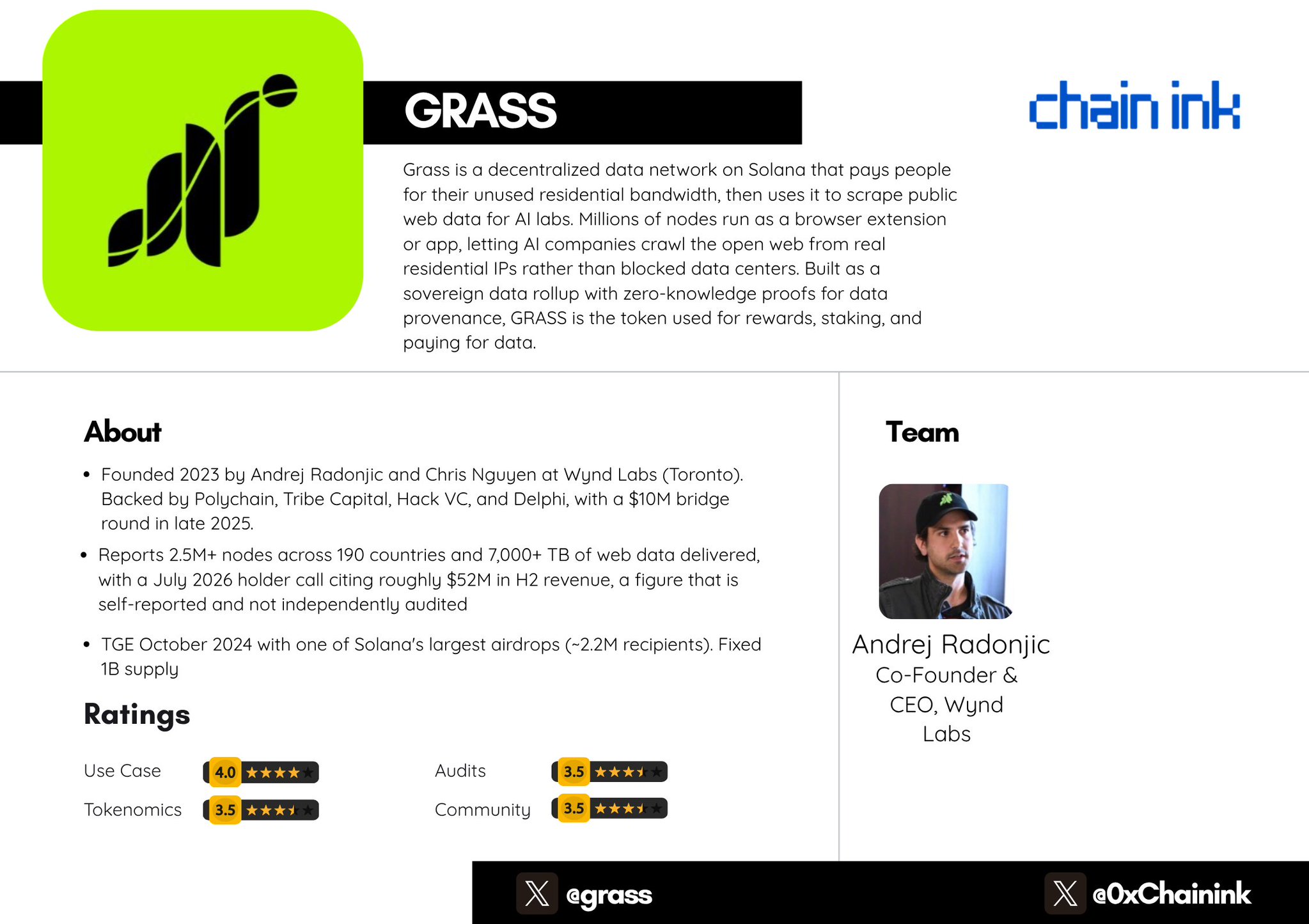 26 6 3.10K 閱讀原文 >釋出後GRASS走勢看漲Grass solves the AI data bottleneck, has scale and reported revenue, but audit and token allocation carry risk.
 𝒫𝓊𝒻𝒾 TA_Analyst Trader C6.39K @kriptopufi𝒫𝓊𝒻𝒾 TA_Analyst Trader C6.39K @kriptopufi
10% above the support zone. A buy can be attempted by waiting for it to approach the support. I expect an uptrend as long as there is no daily close below 3370. $GRASS https://t.co/AOqN4Us6o7
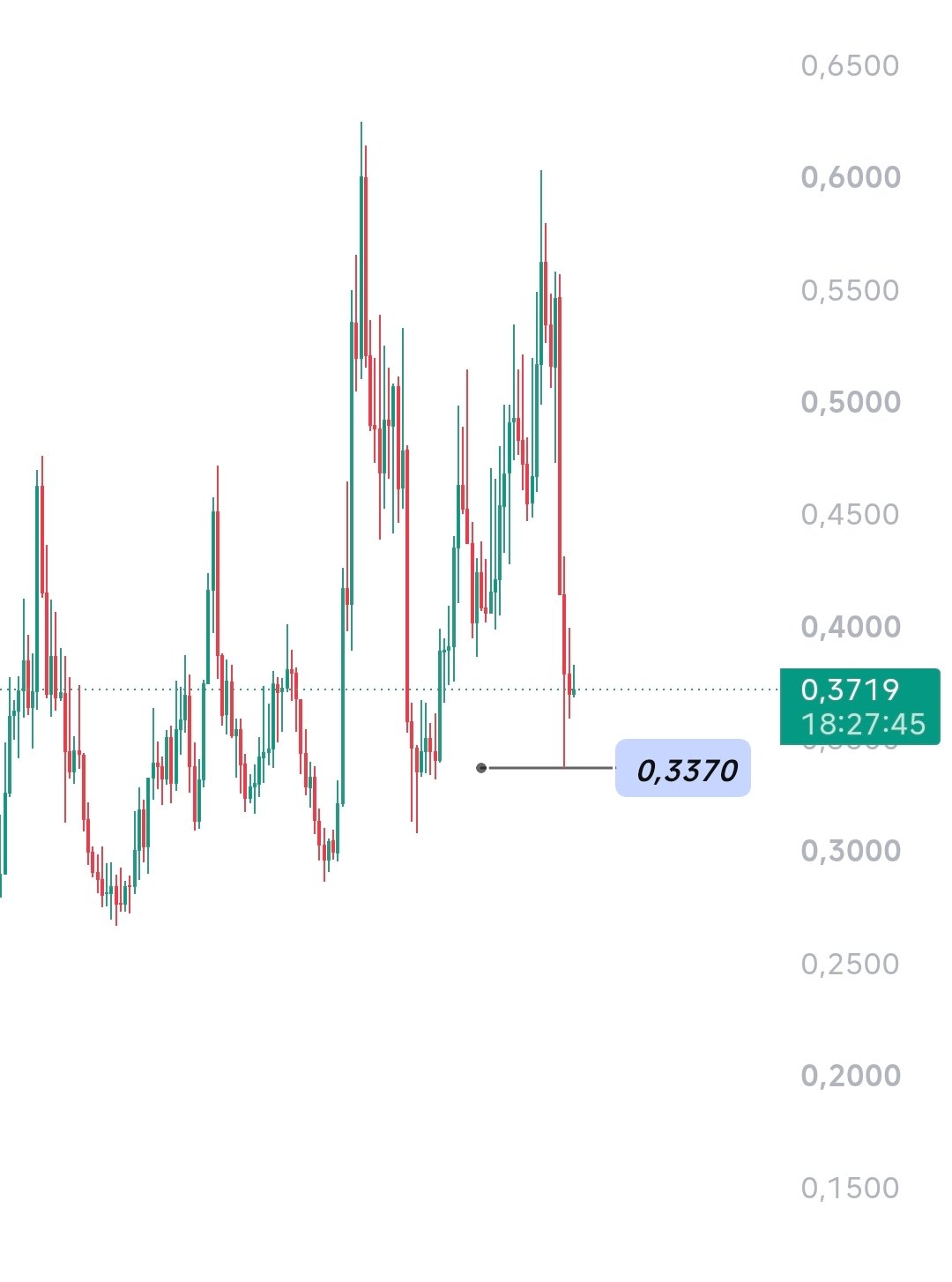 4 0 422 閱讀原文 >釋出後GRASS走勢看漲GRASS is above the support level; if it does not break below 3370, an upward move is expected, and a dip-buy is recommended.
- 𝒫𝓊𝒻𝒾 TA_Analyst Trader C6.39K @kriptopufi
10% above the support zone. A buy can be attempted by waiting for it to approach the support. I expect an uptrend as long as there is no daily close below 3370. $GRASS https://t.co/AOqN4Us6o7
4 0 422 閱讀原文 >釋出後GRASS走勢看漲GRASS is above the support level; if it does not break below 3370, an upward move is expected, and a dip-buy is recommended.  YashasEdu FA_Analyst OnChain_Analyst B9.44K @YashasEdu
The revenue numbers from the @grass call looked weak yes but going deeper. They’re deliberately choosing real AI customer revenue (~$17M in 2025 scaling to $65-75M in 2026) to fund rewards instead of diluting $GRASS This is early-stage infra behavior as they're building enterprise relationships. They've made the decision to protect token scarcity for when LCR inference actually drives usage-based demand. Current PA is trash I agree and I believe this is going to be longterm game here (something that we aren't used to in crypto)
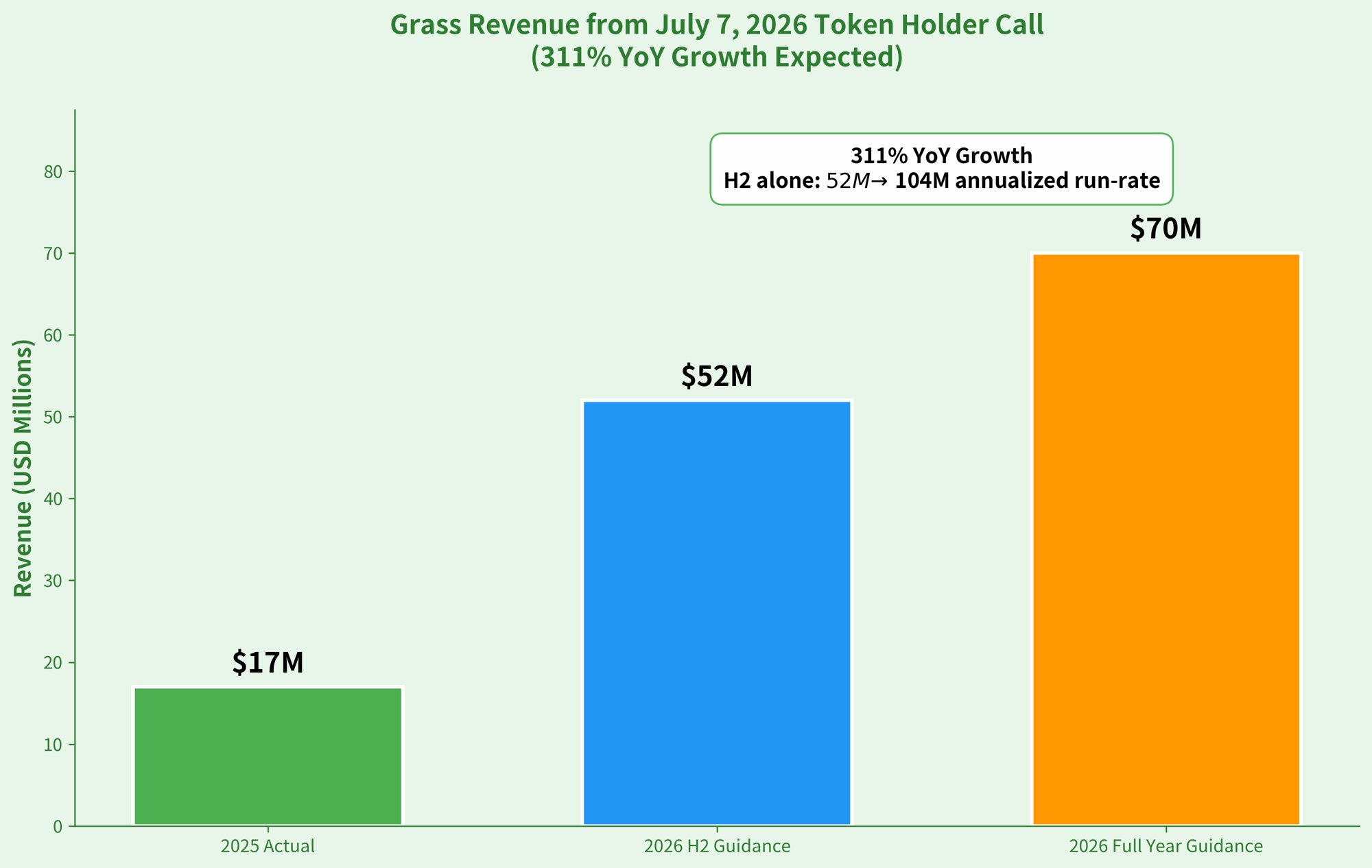 35 15 2.24K 閱讀原文 >釋出後GRASS走勢看漲Grass project's revenue shows strong growth, and its long-term strategy protects token scarcity.
 Tommy Founder VC A67.70K @Shaughnessy119
I'm tuning into the @grass token call happening now led by @0xdrej 🌱
 Grass D567.89K @grass
REMINDER: The Grass Token Holder and Network Participant Call goes live in 90 minutes. Register if you haven’t already 👇 https://t.co/MeuvwaXloW
23 10 7.28K 閱讀原文 >釋出後GRASS走勢中性Grass Token holder call will start in 90 minutes, reminder to register Crypto波段王|Bird🕊️ TA_Analyst Trader A12.88K @ywxkst
$GRASS From a shape perspective, this coin's bottom formation is quite impressive, a large-cycle head-and-shoulder bottom. Once the upper resistance is broken, it will move strongly upward. From a narrative perspective, the AI sector narrative—many people mined in the last round—overall the heat is still good, and this coin is likely to perform well in the future https://t.co/X6IVF4I96N
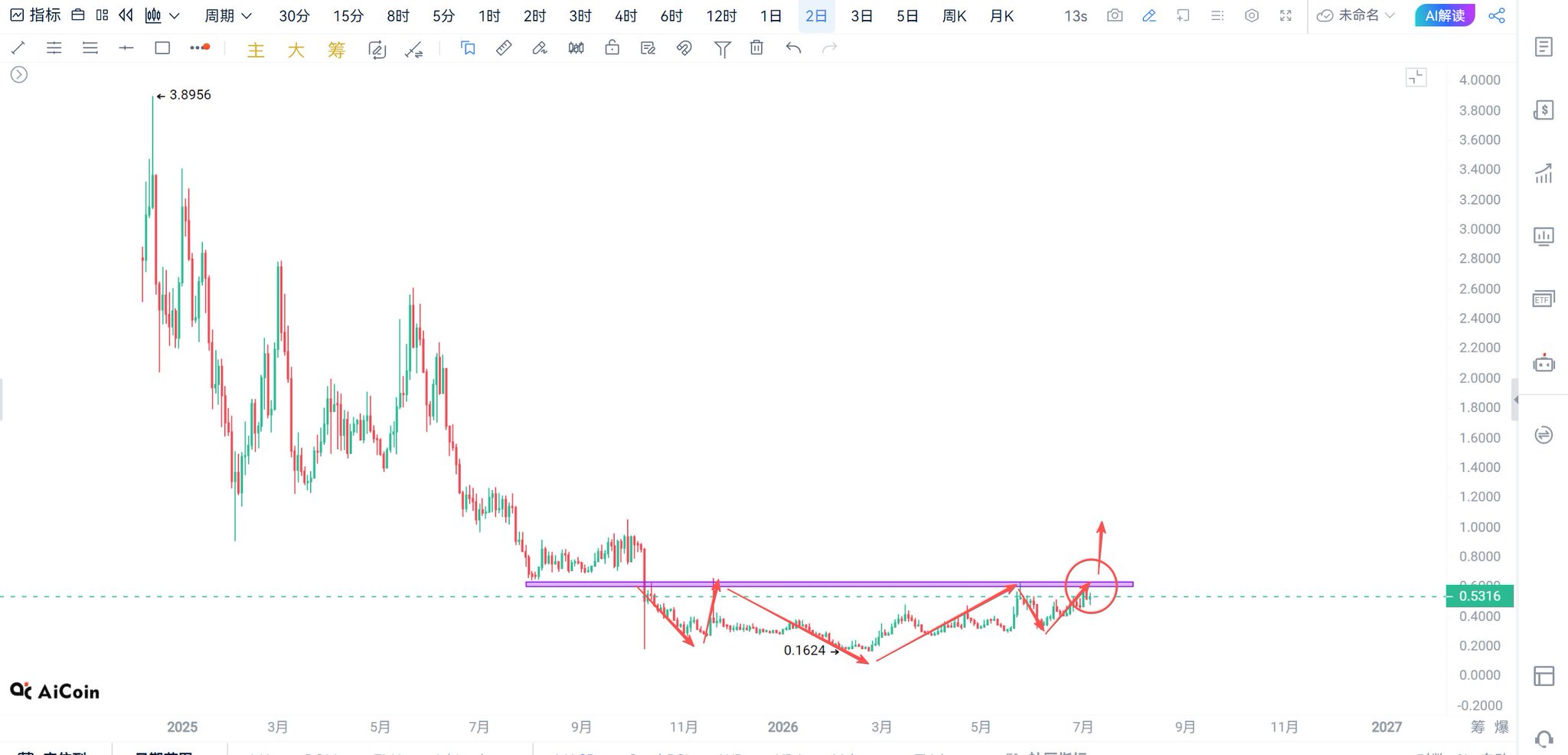 8 8 3.29K 閱讀原文 >釋出後GRASS走勢極度看漲GRASS has formed a large-cycle head-and-shoulder bottom, and is expected to break resistance and rally strongly, with high AI narrative heat.
 τop τick crypτo 📁 🤖🧠 FA_Analyst Tokenomics_Expert C18.33K @toptickcrypto
$GRASS $KLED and Mecka coded
 will depue D67.19K @willdepue
A Stargate for Data Labs are on a trajectory towards >$100B/year of data spend by 2030. As we begin the trillion-dollar compute project, we need to think about the equivalent civilizational-scale effort for the other core ingredient: data. At the foundation of the scaling revolution is a simple empirical law: deep neural networks improve smoothly, near magically, as you scale two things in proportion — (1) the size of the model and (2) the amount of data you train on. And despite the scaling laws being brutally diminishing, we’ve successfully bitten the bullet of logarithmic scaling with exponentially larger clusters and datasets, and received incredible new capabilities in return. But this exponential scaling is bound to hit some limits. Oddly enough, compute has compounded fairly smoothly without limit, with trillions flowing into hypercluster buildout. Instead, we’re starting to hit the limits of an exponential demand for data. Gone are the days of being purely in the compute-limited regime, where we ha
20 4 4.63K 閱讀原文 >釋出後GRASS走勢中性Data demand will become the bottleneck for AI expansion, with annual spending projected to exceed $100 billion by 2030. Bittex Derivatives_Expert Trader S6.79K @BittexXBT
So this is the grass airdrop leaderboard after ppl installed their malware selling themself out for 2 years ? 550m fdv token giving their top 10 contributors fee coupons allo https://t.co/OHyHOeWzHg
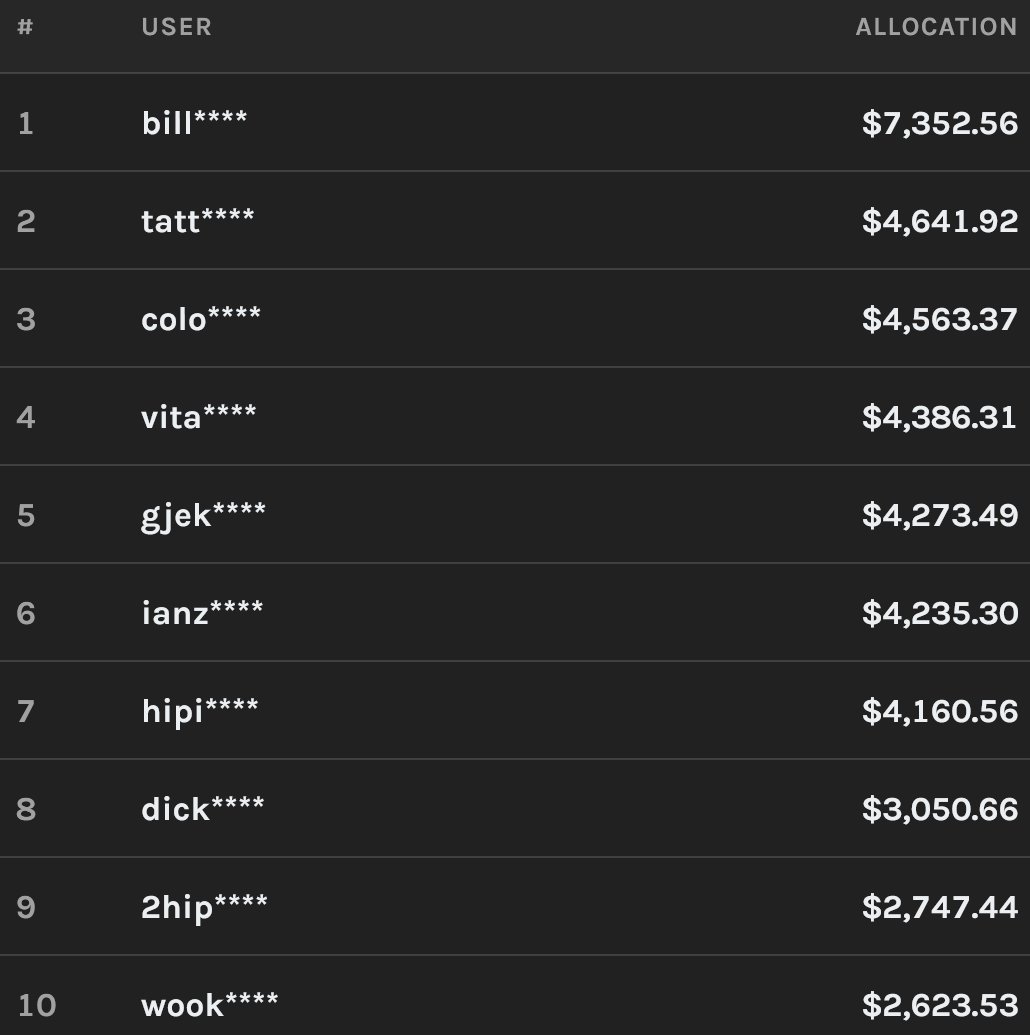 Bittex Derivatives_Expert Trader S6.79K @BittexXBT
LMAO https://t.co/g1aPUOBwfO
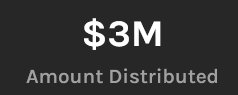 5 6 317 閱讀原文 >釋出後GRASS走勢極度看跌The author mocks the GRASS airdrop for its extremely low returns, believing users sacrifice privacy for a meager reward.
 Tom ⛩ FA_Analyst DeFi_Expert A5.57K @Tom_Degen68
solana:Grass7B4RdKfBCjTKgSqnXkqjwiGvQyFbuSCUJr3XXjs One of the most important weeks for @grass. They're printing around $33M in annual revenue from AI clients. Paying node operators in USDC, but almost none for solana:Grass7B4RdKfBCjTKgSqnXkqjwiGvQyFbuSCUJr3XXjs holders. On July 7th, there's gonna be a vote on finances, roadmap, and how value actually gets distributed to token holders. - If solana:Grass7B4RdKfBCjTKgSqnXkqjwiGvQyFbuSCUJr3XXjs holders start getting a cut of the revenue, the whole valuation story changes. At ~$348M mcap and $33M yearly revenue, it's trading around 10.5x revenue. Not cheap, but still has room to run. - On the other side, if nothing changes (token stays useless), then there's no strong reason to keep holding this.
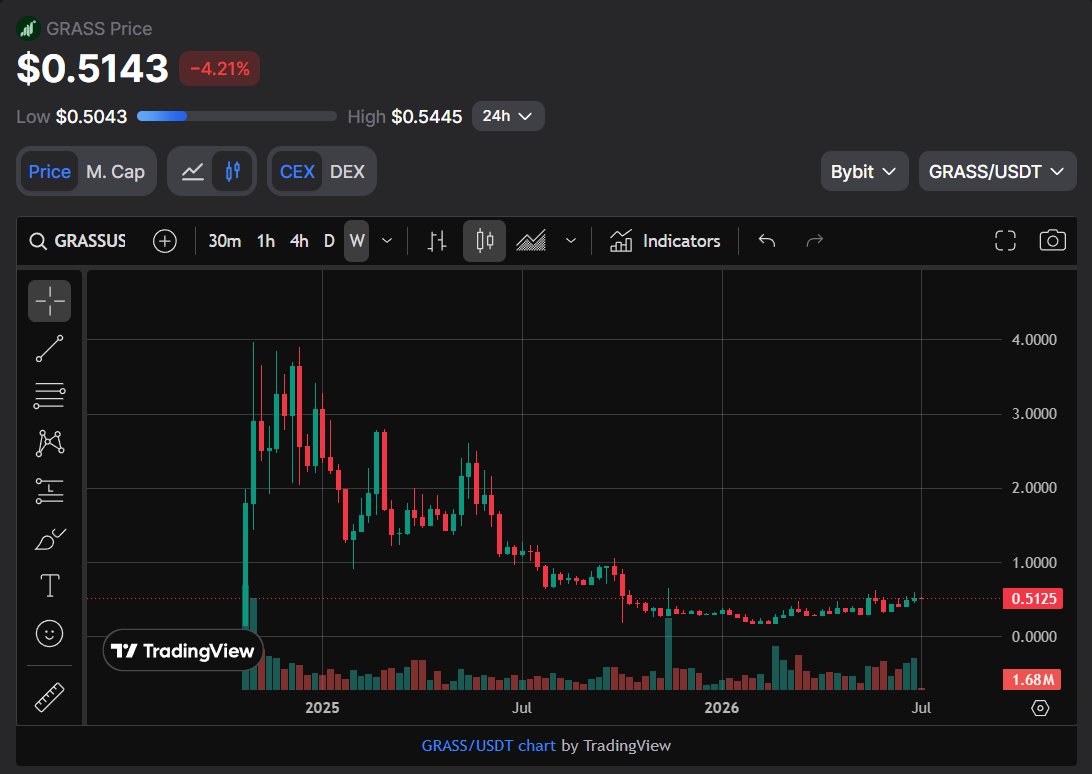 33 18 1.31K 閱讀原文 >釋出後GRASS走勢看漲The GRASS token faces a pivotal vote; if passed, it could receive revenue sharing and have upside potential, otherwise its value is in doubt.
 Crypto Kakarot 🏝️ TA_Analyst Trader C47.71K @cryptokakarot
The second airdrop of GRASS was a fiasco and a true aberration. For the vast majority, at best they receive a bag of chips (1.50€). For those of us with a few followers, referrals, etc., it at least covers a mixed durum kebab menu + fries + Coca‑Cola Zero (≈10€). Many will say “ugh, we’ve been farmed,” “ugh, we’ve been scammed,” “ugh this project is trash,” and that may be true—I don’t know. But precisely, this might be the most bullish thing that has happened to the project in a long time. Giving a large airdrop is not necessarily good for the token, its fundamentals, the project, or retail and institutional holders. When you give away millions of dollars in your own token, the overwhelming majority of people sell immediately. That creates brutal price pressure from the first minute, and Grass has already experienced a brutal sell‑off since its launch a year‑plus ago, and a second wave of selling during a bear market could deliver a mortal blow to the token or the project, making it unsustainable and unable to recover. Conversely, when the airdrop amounts are small, the selling incentive disappears for many. If you received little money, you’re unlikely even to move it. A minority may feel disappointed, cheated, sell their token and uninstall or shut down their apps. However, in the end the market is the judge and will likely stop focusing on "free money" and return to what matters: - Whether the product can attract and retain users. - Whether the product generates revenue. - Whether it is ahead of its competitors. - Whether there is genuine demand for the token. A bad airdrop can be bad news for airdrop hunters. But it is not necessarily bad for holders, for small or large investors, or for those who believe it is a good project with some future potential. An airdrop is meant to distribute tokens, decentralize the network, incentivize participation and build community, and give credibility to the project. But airdrops per se do not create value, and many times—though not always—the two can be in conflict. I don’t know what Solana:Grass7B4RdKfBCjTKgSqnXkqjwiGvQyFbuSCUJr3XXjs will do later, whether they’ll slowly upgrade, whether it’s truly different from other AI projects, whether it will stumble, I don’t know. But I don’t think things are as bleak as some paint them. Grass this year is one of the few altcoins that has performed much better than Bitcoin and Ethereum, seems to have confirmed the floor, and is close to fully recovering and leaving behind the October 10 candle, while the vast majority of altcoins still show weakness and keep bleeding. At the moment, GRASS has a market cap of about $350 million, and if I’m not dreaming, it was said some time ago that they had eight‑figure annual revenues, and that all of this would be verified on‑chain and give value to holders via a burn or buy‑back mechanism or something similar. I repeat, I don’t know what will happen, nor what GRASS will do in the future; I wish I knew. As of today, in my opinion they have a brutal business model, and for now I don’t think they have competitors in their niche—it’s a digital monopoly, and the world’s biggest AI companies need massive amounts of data to train, update and improve their models. If Grass can prove its data adds a differential value, perhaps all of them will become good customers in the future. That’s a hypothesis, the wet dream of the project and investors, we don’t know if it will become reality. But certainly I don’t think Grass is as dead as many are painting it for just giving a second airdrop that’s a bit irregular. And be careful because in the crypto world you already know what usually ends up happening to those projects that are declared dead. I think we need to look a little further.
 66 10 9.04K 閱讀原文 >釋出後GRASS走勢看漲The small airdrop of GRASS is seen as a positive, and the author is bullish on its unique business model and outstanding performance.